In 2011, NASA’s Space Shuttle Atlantis embarked on its final voyage, marking the end of an era and igniting reflections on nearly three decades of pioneering human spaceflight. This historic mission symbolized more than a routine space operation; it embodied hope, resilience, and international collaboration as Atlantis delivered vital supplies to the International Space Station and supported groundbreaking scientific endeavors like the Hubble Space Telescope. Its legacy of technological innovation and adaptability continues to influence future missions, from lunar exploration to Mars ventures. As the world watched with pride and nostalgia, questions arose: what lessons from Atlantis’s remarkable journey will propel us into new frontiers? Could this farewell inspire a renewed global commitment to exploration? This final flight not only celebrated past achievements but also laid a resilient foundation for humanity’s ongoing quest to reach beyond Earth’s bounds—an enduring testament to human ingenuity and the relentless spirit of discovery.
Contents

Atlantis’s Final Journey: A Historic Milestone in Space Exploration
In 2011, NASA’s Space Shuttle Atlantis embarked on its final journey, marking a historic turning point in human space exploration. After nearly 30 years of pioneering missions, this last flight symbolized both the end of an era and the culmination of decades of technological innovation and teamwork. As the shuttle lifted off from Kennedy Space Center, millions around the world watched with a mixture of pride, nostalgia, and anticipation, knowing that this mission would carry critical supplies and scientific equipment to the International Space Station.
Atlantis’s final mission was more than a routine spaceflight; it was a moment of reflection on the shuttle program’s remarkable legacy. Over the years, Atlantis had become known for its versatility and reliability, executing complex tasks like deploying the Hubble Space Telescope and supporting the assembly of the station. This last mission showcased the shuttle’s enduring capacity to perform vital logistical and scientific roles, even after nearly three decades of service.
The timing of Atlantis’s final flight also reflected the shifting landscape of space exploration. NASA was transitioning toward new partnerships with commercial space companies and international agencies, signaling a new chapter beyond the shuttle era. Yet, this mission demonstrated that the foundation laid by the shuttle program remained strong, supporting ongoing research and international collaboration. It served as a bridge, honoring past achievements while paving the way for future endeavors such as lunar exploration and Mars missions.
The emotional impact of Atlantis’s farewell extended far beyond technical milestones. For many, it was a symbol of human curiosity, resilience, and the relentless pursuit of knowledge. The mission’s success inspired a sense of collective pride, uniting people across nations in celebrating the incredible progress made in space science. As Atlantis returned home, it left behind a legacy of perseverance, innovation, and international cooperation that continues to influence space exploration today.
This historic flight also highlighted the importance of adaptability and technological upgrades. Despite its age, Atlantis demonstrated that with proper maintenance and improvements, older spacecraft could still perform reliably. The mission’s achievements in cargo handling, docking, and in-orbit repairs have become benchmarks for developing next-generation space vehicles and supporting long-term human presence beyond Earth.
In essence, Atlantis’s final voyage was a testament to human ingenuity and shared effort. It marked the end of a significant chapter in space history but also opened new possibilities for future exploration. The mission embodied the spirit of discovery that drives us to reach further and dream bigger, inspiring generations to come. Its legacy remains a guiding light in our ongoing quest to explore the cosmos.
Legacy of a Trailblazer: The Incredible Career of Space Shuttle Atlantis
Space Shuttle Atlantis, designated OV-104, stands out as one of NASA’s most accomplished orbiters, having flown a total of 33 missions over nearly 30 years. Its first launch in 1985 came during a period of rapid innovation and expansion in human spaceflight, and throughout its career, Atlantis proved to be a reliable and versatile workhorse for the agency. Its ability to handle complex, demanding tasks set new standards for operational excellence in space missions.
One of Atlantis’s most notable achievements was deploying the Hubble Space Telescope in 1990. This mission revolutionized astronomy by providing unprecedented views of the universe and leading to countless scientific breakthroughs. Atlantis’s skill in performing delicate in-orbit repairs and servicing missions extended the telescope’s lifespan significantly, underscoring the shuttle’s unique capability to support critical and complex payloads.
In addition to Hubble, Atlantis played a central role in constructing and maintaining the International Space Station. It flew multiple assembly missions, delivering vital modules and infrastructure necessary for the station’s development. Its cargo capacity, precision docking procedures, and ability to support international collaborations made it indispensable in expanding humanity’s presence in orbit.
Over the years, Atlantis underwent several technological upgrades. These improvements included enhanced thermal protection tiles, upgraded avionics, and safety systems that kept pace with evolving standards. Such modifications allowed the orbiter to remain operationally effective even as the space environment and mission demands changed, demonstrating a remarkable adaptability that contributed to its longevity.
Atlantis’s reputation for reliability was cemented by its consistent performance during complex missions. Its crewed flights not only advanced scientific knowledge but also showcased the shuttle’s ability to execute high-stakes tasks with precision. This reliability helped build confidence in NASA’s human spaceflight capabilities during a time of growing international cooperation.
Throughout its operational life, Atlantis also supported numerous satellite deployments, experimental payloads, and space station resupply missions. Each mission added to its legacy of versatility and resilience, showcasing the shuttle’s capacity to adapt to different objectives and challenges. Its track record of success made it a symbol of NASA’s technological ingenuity.
The shuttle’s legacy is also reflected in its contributions to international partnerships. Atlantis’s missions brought together scientists, engineers, and astronauts from around the world, fostering a spirit of cooperation that continues to shape space exploration today. Its history is a testament to what can be achieved through collaboration, perseverance, and technological innovation.
Nearly three decades of service have left an indelible mark on space exploration. Atlantis’s achievements have paved the way for future missions, inspiring new generations of explorers and engineers. Its lasting impact goes beyond the hardware, embodying the relentless human drive to explore, understand, and expand our presence beyond Earth.
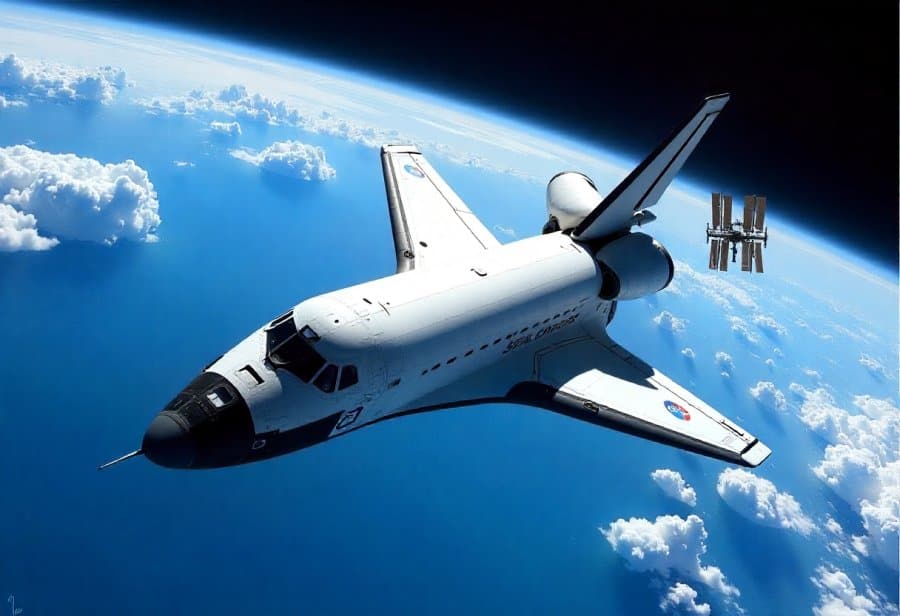
A United World Watches: Global Reactions to Atlantis’s Farewell Flight
The final shuttle flight of Atlantis in 2011 sparked a wave of emotion both in the United States and around the world. For many, it marked the end of an era filled with awe-inspiring achievements in human spaceflight, stirring feelings of nostalgia and pride. The mission was more than just a technical milestone; it became a symbol of decades of hard-won progress, international teamwork, and scientific discovery. As Atlantis lifted off, millions watched with a sense of collective accomplishment, recognizing its vital role in expanding our understanding of space and our place within it.
International partners expressed deep gratitude and admiration for the collaborative effort behind Atlantis’s last journey. Countries across Europe, Asia, and the Americas celebrated the mission as a shared achievement—highlighting how space exploration has become a truly global endeavor. Their messages of support underscored the importance of international cooperation in advancing scientific knowledge and maintaining a continuous human presence in space. The success of the mission reinforced the idea that tackling space’s biggest challenges requires united efforts beyond borders.
Media coverage captured the emotional weight of Atlantis’s final flight, often describing it as a poignant farewell to a beloved spacecraft. News outlets highlighted the shuttle’s historic contributions, from deploying the Hubble Space Telescope to supporting the assembly of the International Space Station. Stories focused on the personal journeys of astronauts, engineers, and scientists whose careers were intertwined with the shuttle program. These narratives helped the public connect emotionally to the mission, framing it as a collective human achievement that transcended national pride.
Reactions from the public ranged from pride and inspiration to nostalgia and reflection. Many saw Atlantis’s last journey as a testament to what humanity can accomplish through perseverance and ingenuity. It prompted conversations about the future of space exploration, emphasizing the need to build on the shuttle’s legacy with new technologies and international partnerships. The mission’s success became a rallying point for advocates of continued exploration, fueling optimism about what lies ahead.
This emotional response extended beyond borders, reminding us that space exploration is a shared human endeavor. The story of Atlantis’s final flight resonated with people across the globe, inspiring the next generation of explorers and scientists. It underscored that our collective curiosity and resilience are what drive us to reach further and explore deeper into the universe. The international admiration and personal stories woven into the coverage highlighted how space has become a unifying pursuit that brings diverse nations together.
The end of the shuttle program marks a pivotal moment in NASA’s history, prompting reflection on its profound influence on space exploration. As we look ahead, understanding the legacy of Atlantis within NASA’s shuttle program history helps contextualize the advancements made and the foundation laid for future missions. For a deeper insight into this legacy, explore the legacy of atlantis within nasa’s shuttle program history.
Beyond the Horizon: How Atlantis’s Final Mission Shapes Future Space Endeavors
The success of Atlantis’s final mission has had a lasting influence on how space agencies plan and execute future exploration efforts. It demonstrated that international cooperation and meticulous logistical planning are essential for maintaining a sustainable human presence in space. By delivering critical supplies and scientific equipment to the International Space Station, the mission proved that coordinated efforts across nations can keep humans in orbit and support ongoing research, setting a proven blueprint for subsequent projects.
Technological lessons from Atlantis’s last flight continue to shape spacecraft design and operational procedures. Its reliable thermal protection system and upgraded avionics showed that even older spacecraft can perform dependably with targeted enhancements. These insights are guiding the development of next-generation vehicles, emphasizing safety, efficiency, and adaptability—principles that are crucial for long-term missions beyond Earth orbit.
Looking ahead, Atlantis’s achievements have directly influenced ambitious programs like NASA’s Artemis. The refined docking procedures and cargo transfer techniques developed during its missions now underpin lunar exploration plans. The ability to deliver supplies reliably and support scientific experiments in orbit is central to establishing sustainable outposts on the Moon and beyond. These operational advancements are also inspiring private companies, fueling a more resilient and innovative space industry.
The emphasis on adaptability demonstrated by Atlantis’s multiple upgrades over nearly three decades underscores the importance of flexible platforms capable of evolving with new challenges. As humanity prepares for permanent habitats on the Moon or Mars, this resilience becomes even more vital. The mission’s legacy highlights that building versatile, upgradable spacecraft is key to supporting long-term exploration and establishing a foothold in distant worlds.
Beyond technological progress, Atlantis’s final flight reinforced the critical role of logistics in space infrastructure. Its capacity to carry large payloads, deliver supplies, and support maintenance ensured the continuous operation of the space station. These logistics are fundamental for sustaining scientific research and human life in orbit, making efficient cargo handling a priority for future long-duration missions.
The mission also fostered a spirit of innovation and international partnership that continues to drive progress. Its success proved that perseverance and collaboration can overcome many hurdles of space exploration. This collaborative ethos is now guiding efforts to develop sustainable space habitats and establish more permanent human presence on the Moon and Mars, emphasizing that shared effort is essential for reaching new frontiers.
Finally, Atlantis’s last flight laid a foundation for resilience and ingenuity that extends well beyond its immediate achievements. It demonstrated that technological reliability, combined with international cooperation, can propel humanity into new realms of exploration. As we move forward, the lessons learned from this historic mission will inform and inspire every step into the cosmos, ensuring that each new mission stands on the solid ground of past successes.

End of an Era, Dawn of New Frontiers: Reflecting on Atlantis’s Last Flight and Its Enduring Legacy
The final flight of Atlantis in 2011 marked a milestone that resonates deeply in the story of human space exploration. It was more than the retirement of an iconic spacecraft; it symbolized nearly three decades of perseverance, innovation, and international collaboration. This mission reaffirmed that with careful maintenance and continual upgrades, even older technology can perform reliably in the demanding environment of space. As Atlantis returned home, it carried not only supplies and scientific instruments but also a legacy of human ingenuity and resilience.
This journey’s significance extends beyond its immediate accomplishments. Atlantis’s last flight laid a foundation of trust in international partnerships and shared resources, shaping the future of space missions. Its successful cargo deliveries and docking procedures serve as a blueprint for upcoming lunar and deep-space exploration efforts. The technological lessons learned have influenced spacecraft design, emphasizing safety, adaptability, and efficiency—key elements for sustainable exploration beyond low Earth orbit.
The shuttle’s enduring legacy is also reflected in the inspiration it provides to new generations. Its story underscores that perseverance, continuous learning, and collaboration are essential to pushing the boundaries of what’s possible. The innovations and operational insights gained through Atlantis’s service continue to fuel advancements in spacecraft technology and mission planning. These contributions ensure the spirit of discovery remains alive as humanity sets its sights on the Moon, Mars, and beyond.
Looking ahead, the lessons from Atlantis’s final journey remain vital. They remind us that each achievement builds on the lessons of the past, shaping a resilient and adaptable path forward. Its success demonstrates that technological reliability, combined with international cooperation, can propel us into new frontiers. As we venture further into space, the legacy of Atlantis will continue to guide and inspire every step beyond Earth, fostering a shared sense of purpose and curiosity.
In the end, Atlantis’s last flight was more than a farewell; it was a celebration of human potential. It proved that exploration is a collective effort driven by shared dreams and relentless effort. The mission’s impact goes beyond technology—it embodies the enduring human spirit to explore, discover, and expand our horizons. The stories of resilience and innovation from Atlantis continue to inspire future explorers, reminding us that with determination and collaboration, there are no limits to what we can achieve.
The legacy of Atlantis’s final voyage is etched into the fabric of space history. It has shown that perseverance and international partnership are essential to overcoming the challenges of exploring the cosmos. This mission has set a standard for resilience and adaptability, inspiring new initiatives and technological advancements. Its influence endures, fueling ambitions for sustainable space exploration and laying a solid foundation for humanity’s next great adventures.
As we look to the future, the lessons from Atlantis’s last flight remain a guiding light. They emphasize that progress depends on building upon past successes and maintaining a spirit of collaboration. The mission exemplifies how perseverance and shared effort can turn challenges into opportunities. Atlantis’s journey reminds us that exploration is a continuous voyage fueled by human curiosity and ingenuity—an inspiring legacy that will propel us into the unknown for generations to come.